Most people think they’ll have time to figure out long-term care later. A little help for a grandkid’s down payment here, a debt payoff there, nothing that feels like a big financial decision. Then a parent or spouse ends up needing a nursing home, and a caseworker starts asking questions about money that moved five years ago.
That’s the moment a lot of families first hear about the Medicaid look-back period. By then, it’s too late to do anything but pay the penalty.
We’re about to walk through exactly how this rule can put your life savings at risk without you ever seeing it coming. Stick with us, because there’s a way around it that millions of Americans are already using, and it has nothing to do with trusts or paperwork.
The Assumption That Sets Everyone Up to Fail
Before any of this can catch you off guard, there’s an even more basic misunderstanding sitting underneath it. A KFF poll found that 45 percent of Americans over 65 believe Medicare will cover a nursing home stay. It won’t. Medicare only covers up to 100 days of rehab following a hospital stay, and that’s the extent of it.
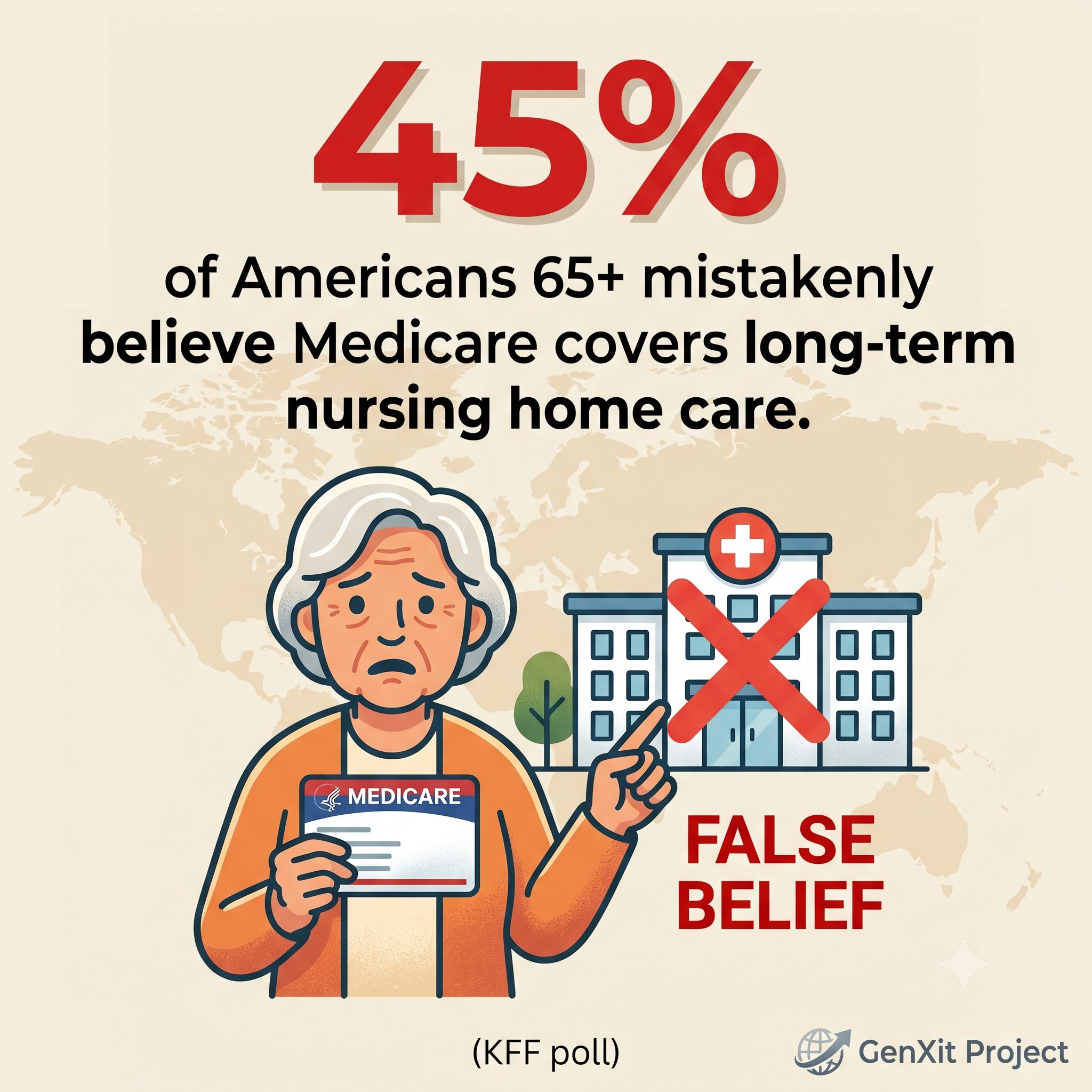
Once those 100 days run out, you’re either paying privately or spending your own savings down until you’re poor enough to qualify for Medicaid. That’s the system working exactly as designed. It just isn’t the system most people think they’re enrolled in, which is exactly why the five-year clock below tends to surprise people who assumed Medicare already had them covered.
The Five-Year Clock You Didn’t Know Was Running
Here’s the part that catches people off guard. The IRS lets you gift up to $19,000 per person tax-free every year. Most people assume that if it’s fine with the IRS, it’s fine, period. Medicaid doesn’t see it that way at all.
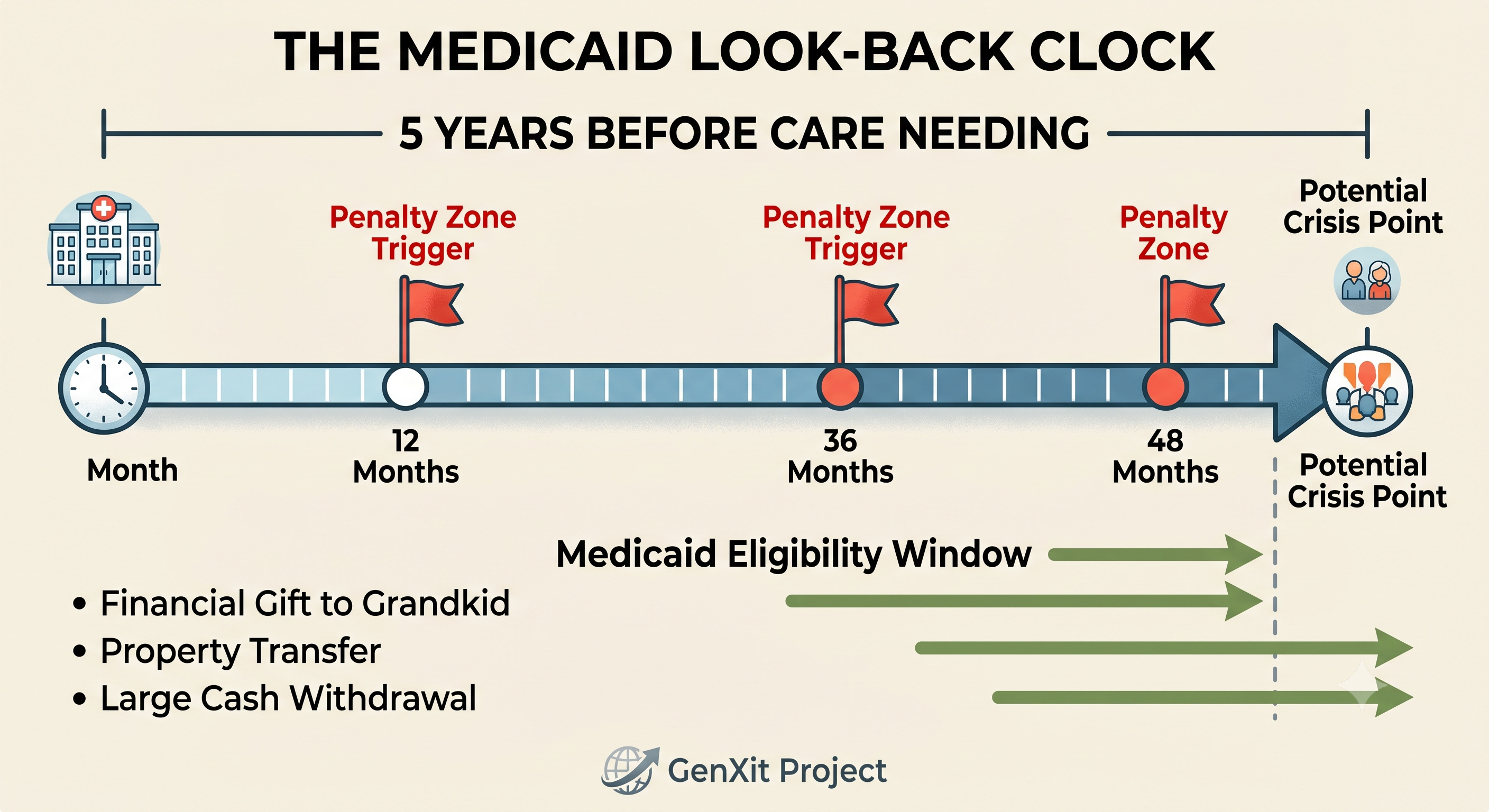
If you apply for Medicaid to help cover nursing home care, the state reviews every transfer you made in the previous 60 months. Gifts, property transfers, money handed to a child or grandchild, even a home addition you paid for out of pocket. If any of it counts as a transfer for less than fair value, Medicaid doesn’t deny you outright. It imposes a penalty period, a stretch of time where you’re on the hook for the full cost of care yourself, calculated by dividing what you gave away by your state’s average monthly nursing home cost.
Give away $100,000 and your state’s nursing homes average $10,000 a month, and you’ve just bought yourself ten months of paying full price before Medicaid steps in.
Why “I’ll Deal With It Later” Isn’t Actually a Plan
The uncomfortable math here is that the look-back period is longer than most people’s planning horizon. If you’re not thinking about long-term care until you’re staring down a diagnosis or a fall, you’ve already missed the window to do anything about the last five years of your financial life.
Even setting up an irrevocable trust to protect assets doesn’t help if you do it too late. The trust itself counts as a gift on the day you fund it, so it has to sit for five years and a day before it actually shields anything. Waiting until you think you might need it defeats the purpose entirely.
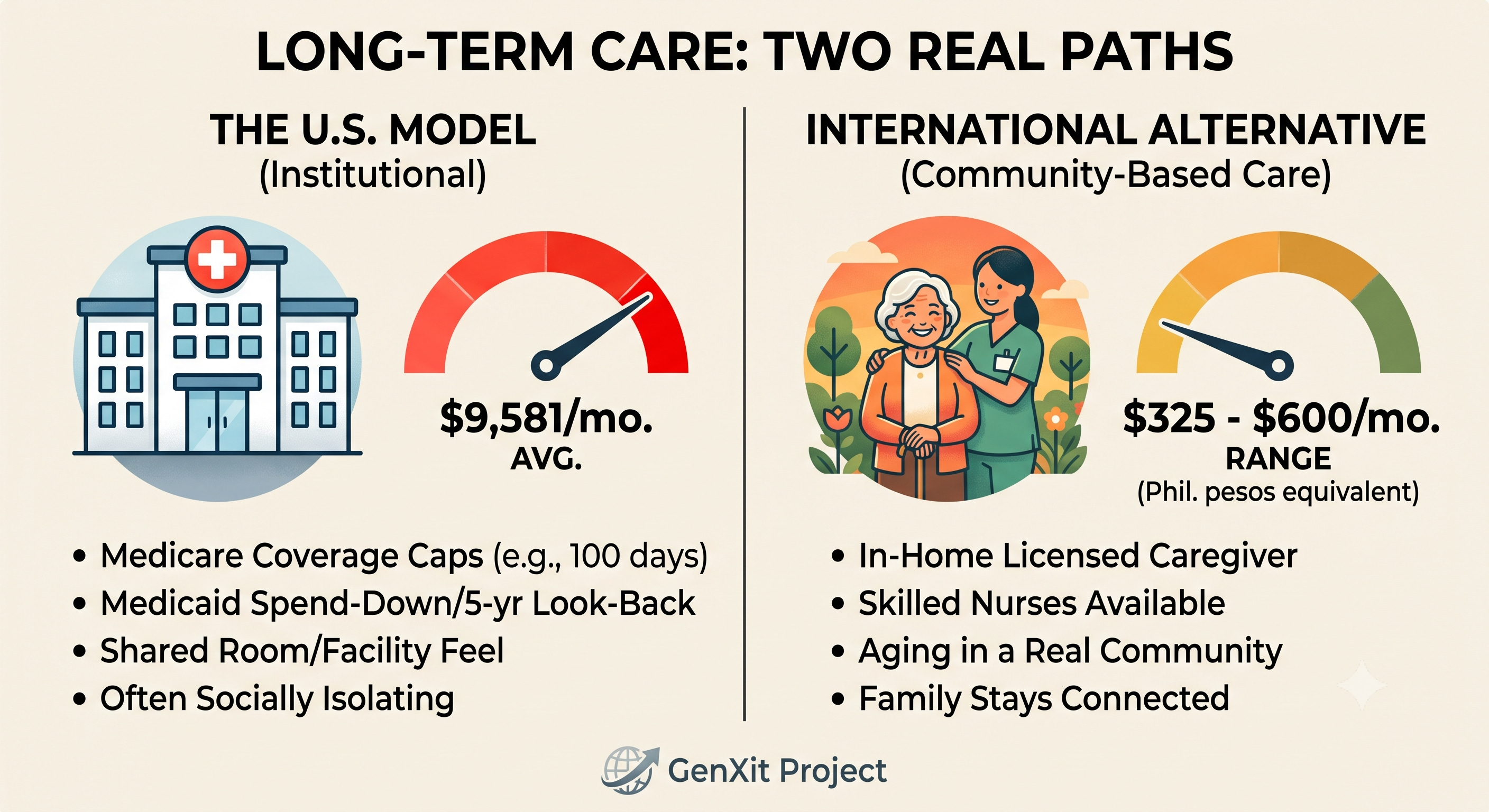
Add in a nursing home bill that CareScout’s most recent Cost of Care Survey puts at a median of $9,581 a month for a shared room, and the whole system starts to look less like a safety net and more like a countdown. You spend your own money until you’re poor enough to qualify for help, and even trying to plan ahead has a five-year tripwire built into it.

We’re not bringing this up to scare anyone into paralysis. We’re bringing it up because there’s a version of retirement where none of this applies to you at all.
The Way Out Isn’t a Trust. It’s a Different Zip Code.
Most long-term care planning tries to solve this problem from inside the system. Better trusts, better timing, better paperwork. There’s another way to sidestep it almost entirely, and it’s the whole premise behind why we started this channel.
If the cost of care where you live is a fraction of a US nursing home, the entire Medicaid math stops mattering. You’re not spending down. You’re not racing a five-year clock. You’re just paying for help, out of pocket, at a price that doesn’t require government assistance in the first place.
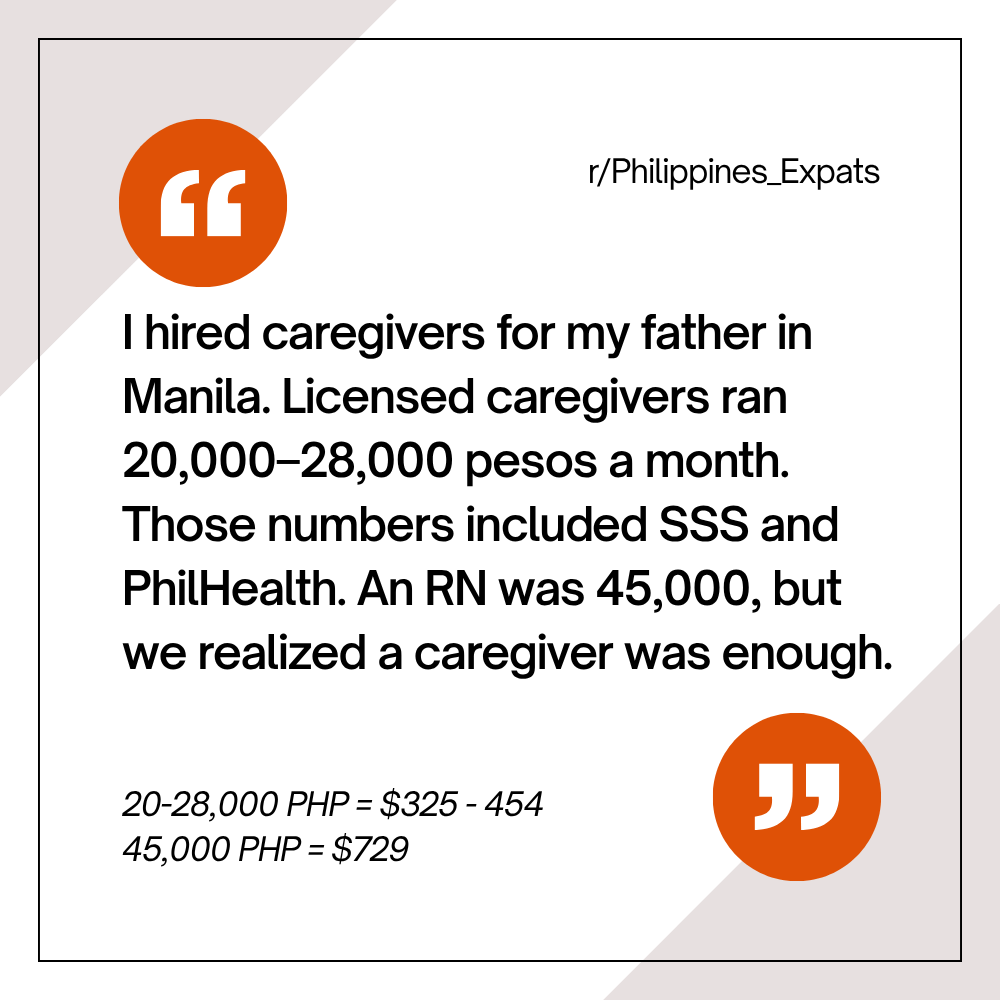
We started looking into this because of MJ’s family. Two of her aunts in the Philippines, both in their late sixties, both fairly independent, have a caregiver living in the home full time for around $175 a month plus room and board. We didn’t want to build anything off one family’s story, so we asked around in a Philippines expat forum and heard from people who’d hired caregivers for their own parents. The range held up: licensed, credentialed caregivers typically run $290 to $535 a month. Even skilled, registered nursing care in the home usually lands in the low hundreds rather than the thousands.
That’s not a discount version of American care. It’s a different system, and the advantages go well past the price tag.
Care happens at home, not in a facility. In the US model, the endpoint for a lot of families is institutional. Someone moves into a shared room, and visits that start out frequent slowly taper off, not because anyone stops caring, but because driving across town to sit in a building that smells like a hospital is a chore. In a country built around in-home care, aging looks like staying in your own house with someone there to help you. Grandkids have an actual reason to visit, not an obligation to squeeze in.

Healthcare access is often better, not worse. Thailand shows up constantly in conversations about the best countries to retire abroad specifically because its hospitals attract medical tourists from around the world and often feel more like a nice hotel than a clinic. Filipino nurses are already a familiar, trusted part of American hospitals, and the Philippines being English-speaking removes an entire layer of worry around communicating clearly during something as important as medical care.
Elder care is cultural, not outsourced. In a lot of these countries, caring for aging parents in the home is simply the norm, not a specialty arrangement you have to go looking for. That changes the emotional shape of aging as much as the financial one.
You get more choice, not less. A US retirement plan built around Medicaid eligibility gives you exactly one path: spend down, qualify, accept whatever facility has a bed open. A retirement built around a country where in-home care is affordable gives you options on care level, location, and how involved you want family to be, none of which require anyone’s approval but your own.
We’ve seen the same story across parts of Latin America too. The country and the currency change. The underlying math, dollars earned here stretching much further there, holds up again and again, and so does the shift toward aging on your own terms instead of the system’s.
Timing Still Matters, Just Not the Way You Think
None of this works if you wait until you actually need care to start looking into it. The version of this plan that works is retiring somewhere you already love while you’re healthy enough to build a life there first. Friends, a doctor you trust, a community that knows you. If you ever need more help later, you’re not arriving as a stranger. You’re already home.
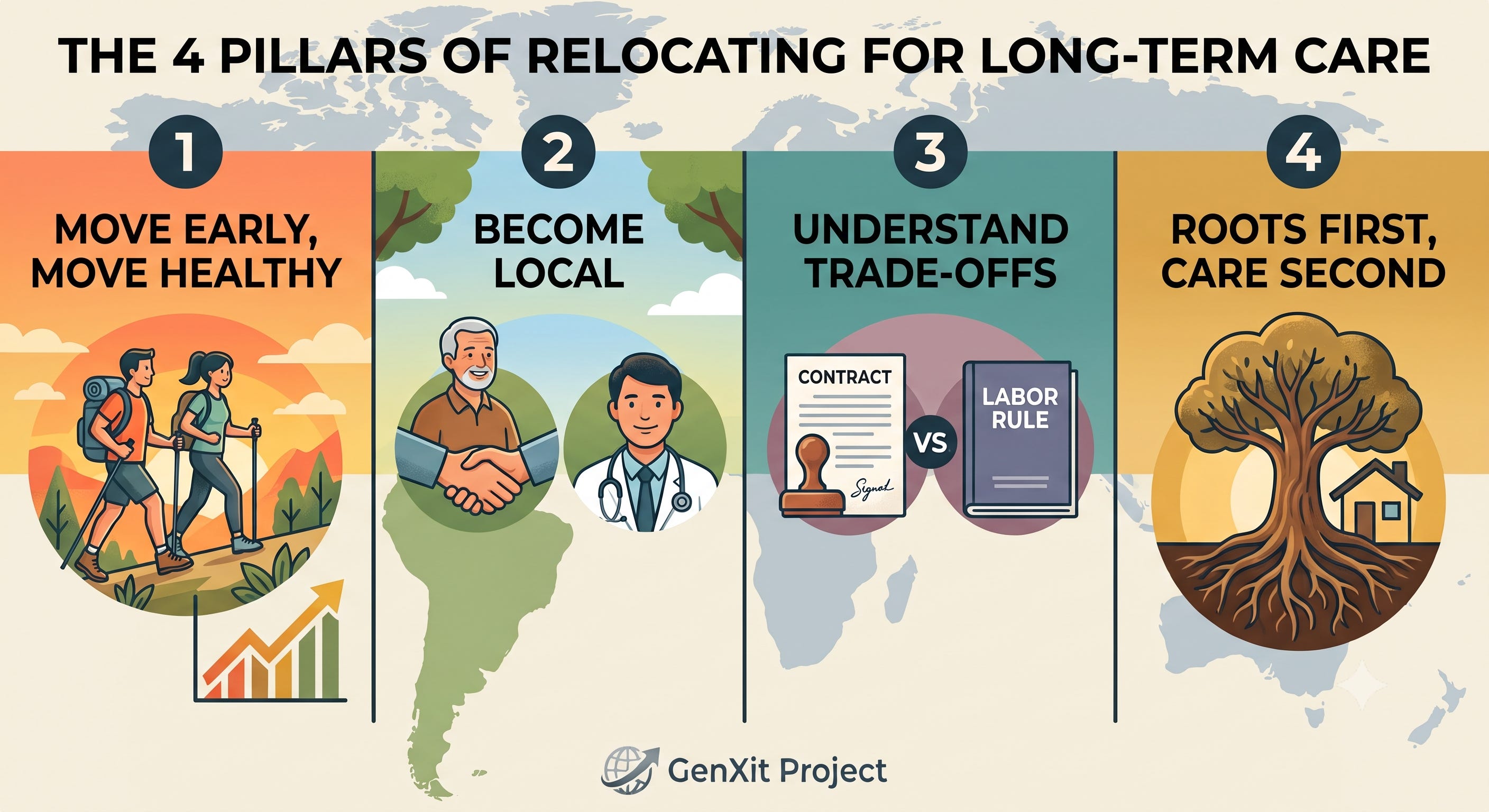
It also isn’t risk-free. If you hire someone directly, you’re an employer, with real agreements and local labor rules to understand. A lot of retirees choose to work through a local agency instead, which handles vetting and coverage. And for genuine medical emergencies, you still need a hospital, not just in-home help. This is a plan for the slow, ordinary decline most of us will actually face, not a replacement for acute care.
Where This Leaves You
The look-back period isn’t going anywhere, and neither is that $9,581-a-month median nursing home bill. But the five-year clock only matters if staying inside the current system is the only plan you’re considering.
The system was built around the assumption that you’ll spend down, qualify, and accept whatever it offers you. It works that way for a lot of people because it’s the only version of retirement most Americans ever get shown. It doesn’t have to be yours.
Ready to Start Planning?
If a shorter runway to your exit date is actually the thing holding you back, that’s exactly what our Bridge Fund Calculator is built for. It tracks your debt payoff and savings growth side by side so you can see a real projected Freedom Date instead of guessing at one. [Link to GenXit Bridge Fund Calculator here]
And if you’re trying to figure out which country would actually be a fit, not just a cheap one, our Dream Destination Worksheet is a 15-question diagnostic built to get past vacation feels and find your real deal breakers, healthcare, visa ease, cost of living, before you commit to anything. [Link to Dream Destination Worksheet here]
👉 Watch the full episode for the family story behind these numbers and a closer look at what in-home care abroad actually looks like day to day.
Links Mentioned in This Article
Who We Are
Mike and MJ are the voices behind The GenXit Project, a resource for Gen X professionals exploring early retirement, financial independence, and life abroad. We cover international relocation, expat finance, and the real logistics of leaving it all behind (in the best way). Follow our journey on YouTube and the website as we turn “what if” into “what’s next.”