

We spent most of our adult lives doing what we were supposed to do.
Work hard. Build savings. Climb. Defer the good stuff until later. And trust that the system we were handed would actually deliver on its end of the deal.
Then life interrupted the plan. And we started asking different questions.
This article is for anyone who has quietly wondered if the retirement they were promised is still worth waiting for, and whether there might be a smarter, more honest way to get there.
The finish line keeps moving
Here is something nobody talks about when you are in your thirties and just grinding away: the finish line is not fixed. The costs go up. The goalposts shift. And one day you look up and realize that the version of retirement you were working toward looks a lot less appealing than it did twenty years ago.
Forbes recently ran a piece that captured what a lot of us have been feeling. The New American Dream, the one that actually delivers on freedom, time, and a life worth living, may no longer be inside America’s borders for a growing number of people.
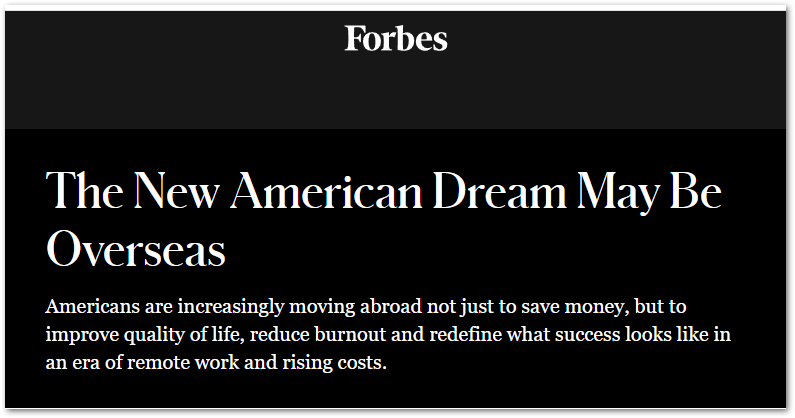
We did not need a magazine article to tell us that. We figured it out the hard way.
👉 Watch the full episode on YouTube: What If Leaving the US Is the Smartest Retirement Move?
When the abstract becomes very concrete
In 2020, MJ was diagnosed with cancer.
She went through eighteen months of treatments and surgery. And until that moment, it had been easy to tell ourselves that we were only fifty, that we were healthy, that there was plenty of time.

Cancer has a way of making the abstract very concrete, very fast. You stop talking about the future in vague terms. You start asking specific questions. What do we actually want? What are we actually waiting for?
MJ made it through. She is healthy. We are grateful for that every single day. But that experience cracked something open in both of us that never fully closed again.
A couple of years later, my father passed away. He was in his late seventies. And when I thought about my father’s life, and both of my grandfathers, all of whom passed between seventy-five and seventy-nine, something clicked.
Seventy-five sounds far away when you are fifty-six. On paper, there is still a lot of runway. But the last twenty years went fast. Really fast. And if the family pattern holds, the window between retirement and serious health decline might be ten to fifteen years. Ten to fifteen years after a lifetime of deferring the good stuff.
That is when the question changed. It stopped being “when can we retire?” and became “what are we actually waiting for?”
The American Dream is not broken. It just needs a new address.
The frustration we felt was not unique to us. It is everywhere right now.
Think about what it costs to actually live well in America today.
Housing has priced out a huge number of people who are doing everything right. They have good jobs. They save. And they still cannot get ahead in any major metro area.
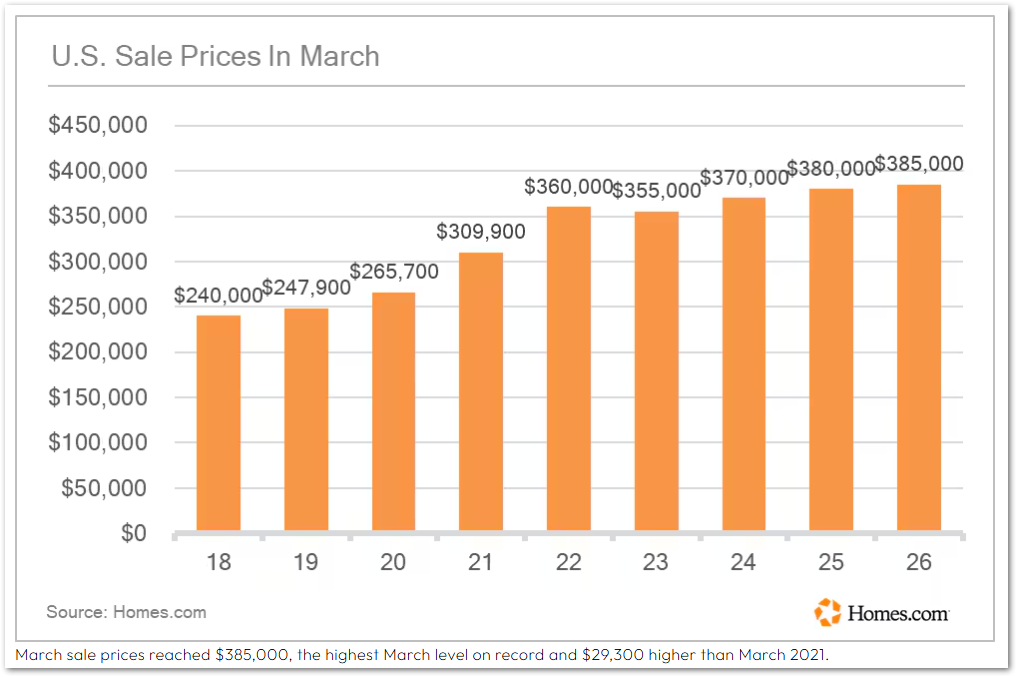
Healthcare hits differently when you have sat in a hospital for eighteen months watching someone you love go through treatment. Americans spend more on healthcare than any other developed nation, and the outcomes do not always reflect that investment.

And then there is the pace of it all. The grind. The hustle culture. The idea that your value as a person is tied to how productive you are. Burnout is not a buzzword anymore. It is a public health issue.
Forbes put it plainly: people are not just frustrated that things cost more. They are frustrated because things cost more while the return on that investment, in healthcare, in housing, in daily quality of life, increasingly does not justify the price.
That is when people start looking up from the treadmill and asking: is there another way?
Lifestyle arbitrage: the concept that changes everything
Here is the term we want you to walk away knowing.
Lifestyle arbitrage.
Arbitrage is a financial concept. It means taking advantage of a price difference in two different markets. Buy low in one place, sell high in another.
Lifestyle arbitrage applies that same idea to how you live your life. It means earning income, or drawing from savings and retirement accounts, in a strong currency like US dollars, while living in a place where your dollar goes dramatically further. Where the cost of living is a fraction of what it is back home. Where healthcare is accessible and affordable. Where the pace is slower, the food is fresher, and the daily experience of being alive feels less like surviving and more like actually living.
This is not a new concept for the wealthy. Rich people have been doing versions of this for decades. Retirements in the south of France. Second homes in Costa Rica.
What is new is that it is becoming accessible to regular people. To people like us.
Remote work changed the math. If your income is not tied to a specific building in a specific city, your geography is suddenly negotiable. And when geography is negotiable, everything shifts.
What the numbers actually look like
We have done the research. Here is a grounded look at three destinations we cover in depth.
In Chiang Mai, Thailand, a couple can live extremely well — quality apartment, great food, solid healthcare — for somewhere between $2,000 and $3,000 a month. In Chicago, that same couple might spend that before rent is paid.
In Lisbon, Portugal, you can find yourself in a walkable, culturally rich European city for a fraction of what a comparable lifestyle would cost in San Francisco or New York.
In Panama City, Panama, you get modern infrastructure, a strong expat community, and government-backed retiree incentives that include significant tax advantages on foreign income.
That is lifestyle arbitrage in action. You are not giving up quality. In a lot of cases, you are upgrading it. You are just doing it somewhere that has not been priced into the stratosphere yet.
👉 Want to run your own numbers? Use our free Retirement Calculator at TheGenXitProject.com: The GenXit Retirement Engine
This is not running away
Whenever we talk about this publicly, someone says some version of: “So you’re just running away.”
We understand where that comes from. It sounds like giving up.
But Forbes made a distinction that landed for us. For a growing number of Americans, moving abroad has become less about escape and more about alignment.
Alignment. That word is exactly right.
What we are trying to align is simple. We want the time and energy we have left to match the life we actually want to be living. Not the life we were told to want. The actual one. The one where you have time to slow down in the morning. Where you are not choosing between healthcare and a vacation. Where dinner for two does not cost eighty dollars.
When MJ was going through treatment, we did not sit in that hospital and think about career milestones. We thought about experiences we had not had yet. Places we had not seen. Time we had not spent.
This is not pessimism. This is honesty. And it is the whole reason we created The GenXit Project.
Where we go from here
We are two years out from making this move ourselves. We do not have all the answers yet. That is the whole point of this channel and this platform.
We are doing the research in real time, country deep-dives, visa walkthroughs, cost-of-living breakdowns, healthcare comparisons, and the things nobody tells you before you go. And we are sharing everything we find.
If you want to go deeper on any of the countries we mentioned, the full country snapshot breakdowns, or the tools MJ and I have been building, head to our toolkit page here o the TheGenXitProject.com. Everything is there.
👉 Start with our free Country Guides: Cost of Living Snapshots
Links mentioned in this article
Watch the full episode: Link to YouTube video here
Free Retirement Calculator: Link to Retirement Calculator here
Country Guides and Snapshots: Link to relevant GenXit Guide here
Who we are

Mike and MJ are the voices behind The GenXit Project, a resource for Gen X professionals exploring early retirement, financial independence, and life abroad. We cover international relocation, expat finance, and the real logistics of leaving it all behind (in the best way). Follow our journey on YouTube and the website as we turn “what if” into “what’s next.”